
Painters, Ports, and Profits: Artists and the East India Company, 1750-1850

 Already started - ends in 19 days, 6 hours

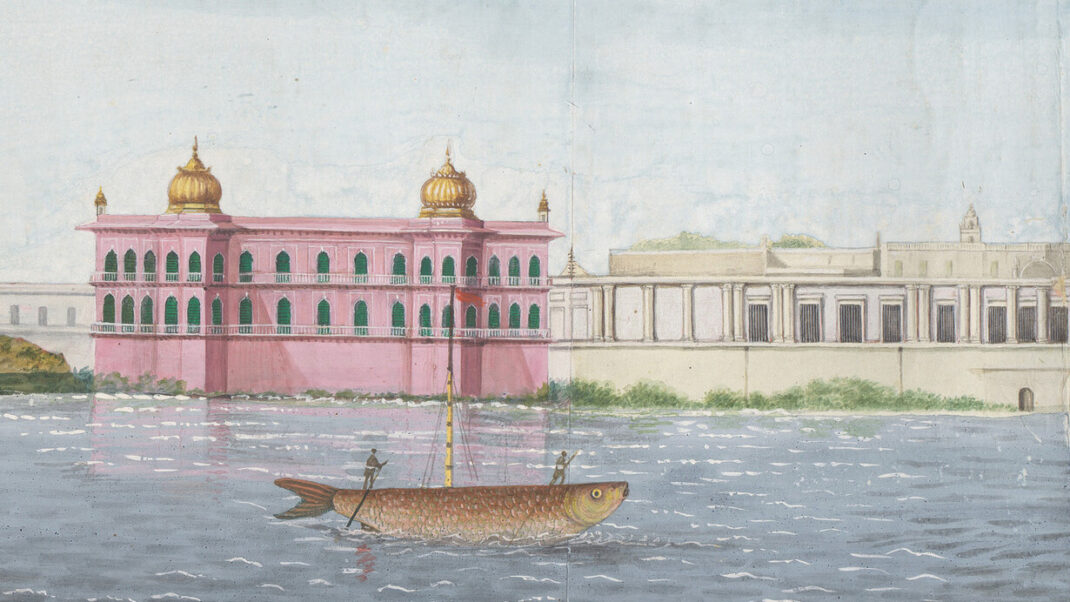
In 1600, a group of businessmen pooled their resources to found the British East India Company. Originally envisioned as a trading corporation—moving cottons, fruits, opium, silks, spices, tea, and more—the Company would become an aggressive agent of British imperialism. Against this volatile backdrop of colonial expansion and exploitation, British, Indian, and Chinese artists forged new relationships and produced innovative works of art. “Company painting” became a prevalent umbrella term for artwork made by Indian artists for patrons of the British East India Company. Drawing on the YCBA’s rich collections, this exhibition is the first to challenge and critically rethink the phrase by considering the relationships among artists trained in South Asia, Europe, and China. Encompassing hand-colored aquatints, finely rendered drawings, oil portraits, and watercolors, the exhibition highlights works by artists whose names are less familiar or no longer known alongside well-established ones.
Details
Recommended events

English-language tour of the KGB prison cells in Tallinn
Come and discover the darker side of Estonia’s recent history! Every Wednesday in June, July and August, an English-language tour…


A gaze of one’s own
In her exhibition in the Cabinet of the Museum Franz Gertsch, Brigitte Lustenberger (b. 1969) is presenting works based on…
